海南摩托车科目四英文题库
1. Which measures is correct when a motor vehicle intends to overtake
A. After overtaking, turn on the right turning light and drive back to the original lane after the necessary safe distance has been pulled away by overtaking.
B. Overtaking from the left side of the previous car
C. After overtaking, turn on the right turn light and drive back to the original Lane immediately.
D. Overtake on the right side
Answer: AB
2. When finding a tire burst on the road, the driver should gently depress the brake pedal, reduce speed and stop the vehicle slowly.
A. Right
B. Wrong
Answer: A
3. Which of the following is a safe way for motor vehicles to pass the intersection marked with this sign?
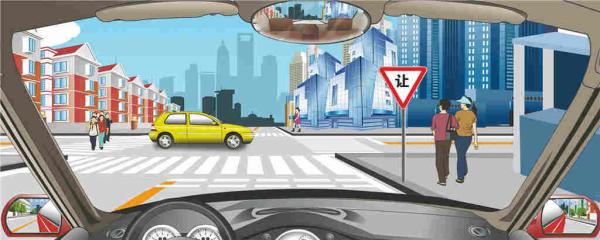
A. Stop and observe the traffic situation around the intersection
B. Approach the intersection by speeding up
C. Observe the traffic situation on the left rear side
D. Approach the intersection at a reduced speed
Answer: D
4. What is the meaning of this sign?
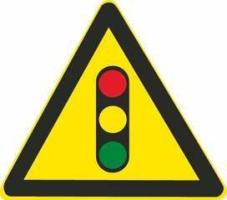
A. Crosswalk lights
B. Watch for pedestrians
C. Attention to traffic lights
D. Intersection
Answer: C
5. What should be done by the driver who intends to overtake but finds that the vehicle in front is also overtaking?
A. Following the vehicle in front closely and finding a chance to overtake it
B. Accelerating to overtake forcefully
C. Continuously sounding the horn to urge the vehicle in front to yield
D. Refraining from overtaking and letting the vehicle in front overtake first
Answer: D
6. When a fast-running vehicle makes a sharp turn, it can very easily cause side collision or an overturn due to the centrifugal force.
A. Right
B. Wrong
Answer: A
7. What should the motor vehicle driver do when the motor vehicle encounters the crosswalk in thissituation?
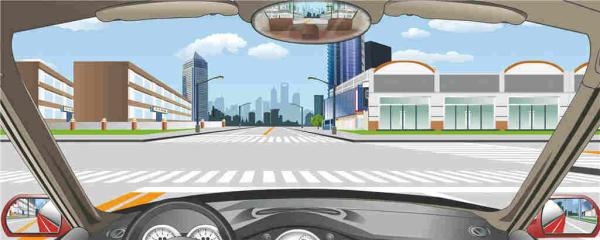
A. Slow down and pass
B. Speed up and pass
C. Sound the horn and pass
D. Stop immediately
Answer: A
8. How to do in this intersection?
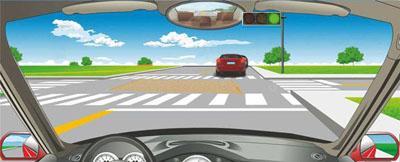
A. Wait in the cross-hatched marking area
B. stop and wait outside the intersection
C. Follow the vehicle in front and pass
D. Wait inside the intersection
Answer: B
9. When driving on a foggy day, the driver should turn on the fog lamp.
A. Right
B. Wrong
Answer: A
10. Which of the following measures is incorrect when a motor vehicle stops?
A. Stop at a stipulated place
B. Avoid stopping on pedestrian streets
C. Avoid obstructing the passing of other motor vehicles and pedestrians when temporarily stops on the road
D. Stop on the non-motor vehicle lane
Answer: D
11. When approaching another vehicle at night, why should the driver alternate between high-and-low-beam at a distance more than 150 meters?
A. Warn each other before passing
B. Driving habit
C. Easy to observe the situation ahead from either side
D. Courtesy
Answer: C
12. When driving on a snowy day, drivers should follow the tracks on the road before them.
A. Right
B. Wrong
Answer: A
13. When a motor vehicle moves through water, the driver should try to maintain a constant speed and sufficient power and pass through without stopping.
A. Right
B. Wrong
Answer: A
14. When a tire blowout on the road, the driver should swiftly depress the brake pedal to reduce speed, do all his can to control the steering wheel and stop the vehicle as soon as possible.
A. Right
B. Wrong
Answer: B
15. At a road that has more than two vehicle lanes in the same direction, the motorcycles should use the very left one.
A. Right
B. Wrong
Answer: B
16. The first-aid measure to rescue a poisoned person is to _______.
A. Take warming-up measures
B. Bring him to a place where air is fresh
C. Give him artificial respiration
D. Depress the heart over the chest
Answer: B
17. How should a motor vehicle follow the other vehicle In front when driving on a road covered with ice and snow?
A. Keep a long safe distance
B. Turn on hazard lamp
C. Change between high-and-low beam alternatively
D. Sound the horn in due time to give a notice to the vehicle in front
Answer: A
18. What is the meaning of this sign?
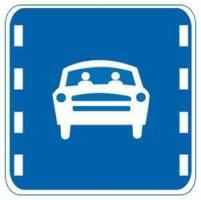
A. Special lane for small vehicles
B. Special lane for motorized vehicles
C. Special lane for taxis
D. Special lane for multi-passenger vehicles
Answer: D
19. When there is no bandage for rescuing a wounded person, which of the following measures is wrong?
A. Dress the wounds with a handkerchief
B. Dress the wounds with a towe
C. Dress the wounds with cotton clothes
D. Dress the wounds with string
Answer: D
20. When a motorcycle wades across the water, the braking efficiency of the brake does not change.
A. Right
B. Wrong
Answer: B
21. What should the driver do when the motor vehicle counters this situation?
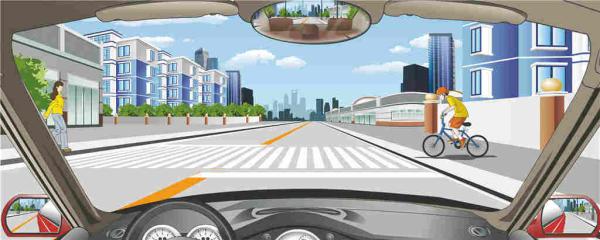
A. Sound the horn continuously to warn
B. Speed up and bypass from the front
C. Slow down when encountering any risks
D. Slow down voluntarily and yield
Answer: D
22. When rescuing a wounded person who has been poisoned by toxic gas, the first measure is to send him/her to a place with fresh air so that he/she will not continue to be poisoned.
A. Right
B. Wrong
Answer: A
23. What is the meaning of this sign?
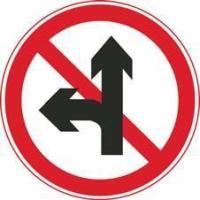
A. No going straight and no changing to left lane
B. No going straight and no left turn
C. Allowed to go straight and turn left
D. No going straight and no right turn
Answer: B
24. When passing through a tunnel, the wrong measure is to ___________.
A. Keep safe distance when two vehicles cross each other
B. Driving with the low beam light
C. Use the hight beam light when two vehicles cross each other
D. Overtaking in the tunnel
Answer: CD
25. When a motorcycle reaches a muddy or burst-and-muddy section, the driver should stop, observe and select the level and solid section or the section with vehicle tracks.
A. Right
B. Wrong
Answer: A
- 更多摩托车英语版驾考试题
-
孝感摩托车类考试英文题库 南充摩托车类考试英文题库 唐山摩托车类考试英文题库 铜陵摩托车科目四英文题库 洛阳最新摩托车科目四试题库英文题 淮南摩托车科目一考试英文400题 湘西境外人员申请中国驾照考试题库摩托车英语 广安2026年摩托车科目一英文题库400题 三明摩托车科目四英语试题 沈阳最新摩托车科目一试题库400英文题 咸宁摩托车英语题库PDF 岳阳最新摩托车科目一试题库400英文题 遂宁2026年摩托车科目一英文题库400题 乌海摩托车驾照科目四考试英语试题 保定摩托车英文驾考题库下载 武威摩托车英文题库 嘉峪关摩托车科目一英语 张家口摩托车的英语考试 江苏摩托车理论考试英语 银川摩托车英文驾考题库下载
- 有国外驾照的外国人只需考科目一
-
- ENGLISH 英语科目一2026年新题库 驾照:C1 C2
- FRENCH 法语科目一2026年新题库 驾照:C1 C2
- GERMAN 德语科目一2026年新题库 驾照:C1 C2
- SPANISH 西班牙语科目一2026年新题库 驾照:C1 C2
- JAPANESE 日语科目一2026年新题库 驾照:C1 C2
- KOREAN 韩语科目一2026年新题库 驾照:C1 C2
- RUSSIAN 俄语科目一2026年新题库 驾照:C1 C2
- ARABIC 阿拉伯语科目一2026年新题库 驾照:C1 C2
- MOTORCYCLE 摩托车科目一2026年新题库 驾照:D E
- 没有国外驾照的外国人还需要考科目四
-
- ENGLISH 英语科目四2026年新题库 驾照:C1 C2
- KOREAN 韩语科目四2026年新题库 驾照:C1 C2
- MOTORCYCLE 摩托车科目四2026年新题库 驾照:D E