博尔塔拉英语版驾考科目四
1. When there is a braking failure, the driver should first control the direction and then try to control the speed.
A. Right
B. Wrong
Answer: A
2. The braking distance will be shortened greatly when the motor vehicle is equipped with ABS brakes.
A. Right
B. Wrong
Answer: B
3. When approaching the turning point of a road, in which of the following ways will motor vehicle drivers easily cause a traffic accident?
A. Driving ahead by occupying the opposite lane
B. Turning the steering wheel quickly when passing through the curve
C. Not reducing speed until driving onto the curve
D. Driving by the right side
Answer: ABC
4. When encountering such pedestrians, what should motor vehicle drivers do?
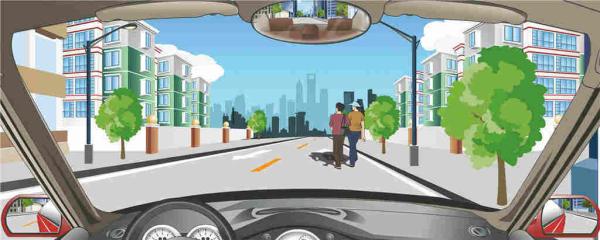
A. Go ahead along the middle line of the road
B. Continuously sound the horn
C. Speed up and overtake
D. Pay attention to the actions of such pedestrians
Answer: D
5. When the tire pressure is too low, what will happen if the tire changes its shape in waves and increases in temperature due to fast movement?
A. Unstable tire pressure
B. Even lower tire pressure
C. Driving resistance increases
D. Tire burst
Answer: D
6. When driving a motor vehicle equipped with power steering, the driver should firmly hold the steering wheel and drive slowly if he suddenly finds that steering is difficult.
A. Right
B. Wrong
Answer: B
7. The marking on the road surface indicates that the speed limit of this road section is 50 km/hour.
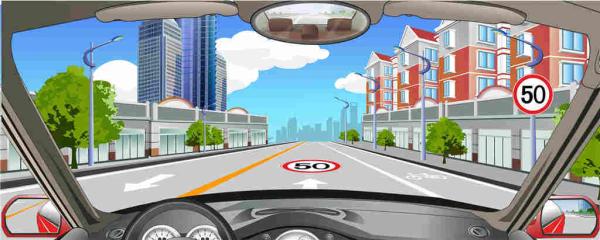
A. Right
B. Wrong
Answer: A
8. When steering failure happens suddenly, if the road condition permits straight movement, drivers should not apply emergency braking.
A. Right
B. Wrong
Answer: A
9. Mr. Zhou drove a light van (with 22 passengers) on the Bingcha Highway. At the spot of 79 kilometers mark by 150 meters of the highway, the van fell into the valley on one side, killing 12 people and injuring 10. What is the main illegal act committed by Mr. Zhou?
A. Driving a motor vehicle having failed to accept inspection in time
B. Carrying passengers on a freight motor vehicle
C. Speeding
D. Fatigued driving
Answer: B
10. Under such circumstance at an intersection. motor vehicle drivers should be prepared to stop and yield at any time.
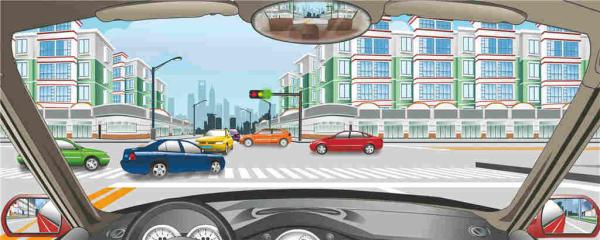
A. Right
B. Wrong
Answer: A
11. It is safest for a motor vehicle driver to overtake the vehicle in front from its righthand on this kind of road.
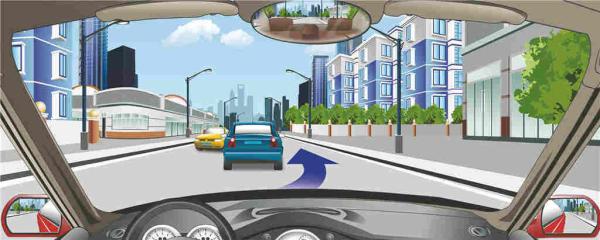
A. Right
B. Wrong
Answer: B
12. The sign on the right indicates that the vehicle should yield to the oncoming traffic as approaching each other.
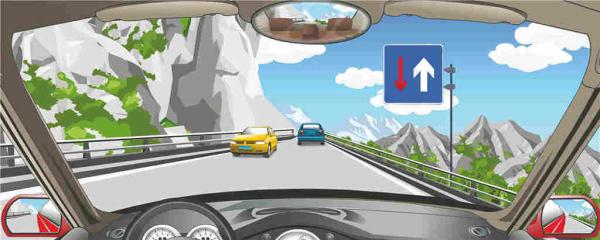
A. Right
B. Wrong
Answer: B
13. The driver should turn left by the left side of the intersection central point.
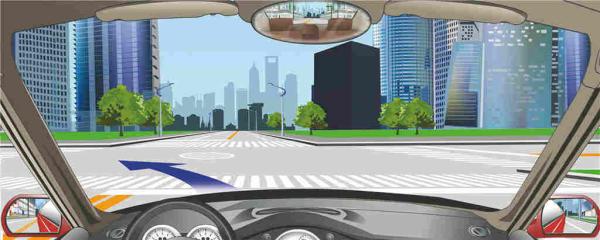
A. Right
B. Wrong
Answer: A
14. The sign on the right indicates to stop and yield for oncoming vehicles approaching on the road ahead.
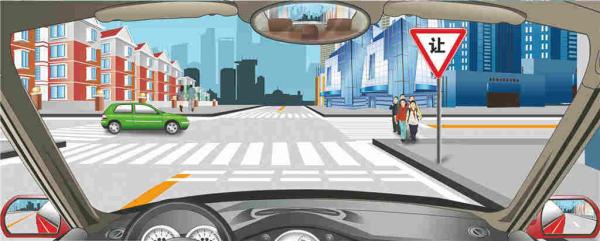
A. Right
B. Wrong
Answer: B
15. When a bus encounters an unexpected situation or an accident, the driver should do his best to minimize the loss and should never cause a secondary accident or even greater loss for the sake of avoiding danger.
A. Right
B. Wrong
Answer: A
16. The sign on the right warns of an embankment road 200 meters ahead.
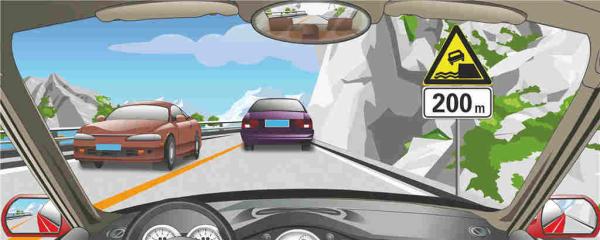
A. Right
B. Wrong
Answer: A
17. The sign on the right warns that the road will narrow over the next 5 kilometers.
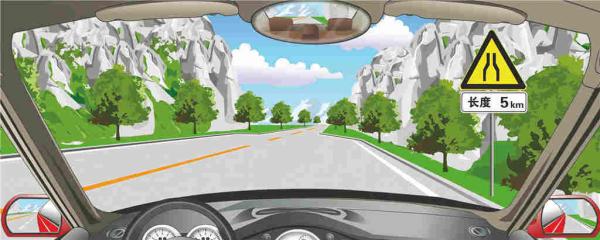
A. Right
B. Wrong
Answer: A
18. It is not safe for a female driver to wear high heels to drive a vehicle.
A. Right
B. Wrong
Answer: A
19. What does this sign on the fly-over junction indicate?
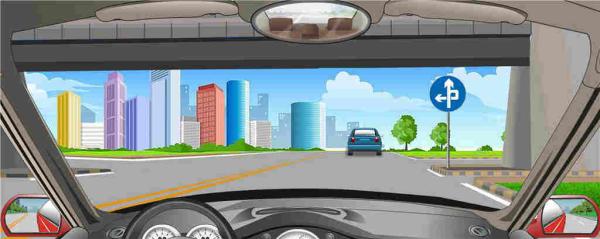
A. Turn right
B. Drive straight or turn left
C. Drive straight or turn right
D. Take a U-turn under bridge
Answer: B
20. When driving on the highway in foggy, rainy, or snowy weather with a range of visibility between 100 meters and 200 meters, what should motor vehicle drivers do?
A. Turn on the fog lamp, low-beam, clearance lamp and front and rear position lamp
B. Drive at a speed of no more than 60 km/hour
C. Keep a breaking distance of more than 100 meters from the vehicle in front in the same lane
D. Leave the highway from the nearest exit as soon as possible
Answer: ABC
21. The sign on the right warns of children on the section ahead.
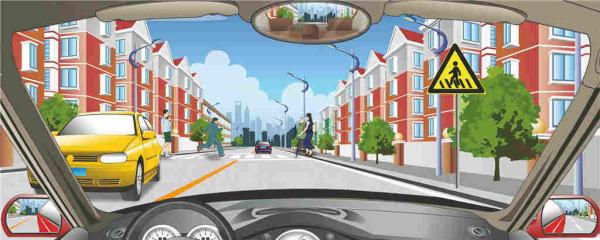
A. Right
B. Wrong
Answer: B
22. This sign warns that the section ahead is under traffic monitoring.
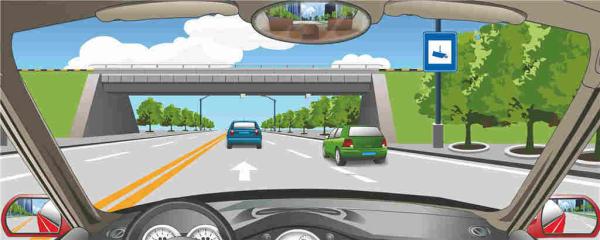
A. Right
B. Wrong
Answer: A
23. When encountering this situation, which of the following is the correct way to overtake other vehicles?
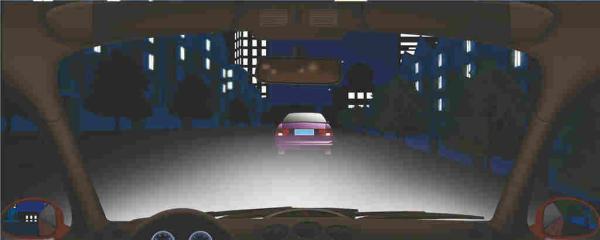
A. Turn on high-beam
B. Use high-beam and low-beam alternatively
C. Turn on low-beam
D. Turning on hazard lamp
Answer: B
24. Mr. Ran drove his car from 6am until 11 am without rest, falling down a steep 8.5-meter ridge at one side of a highway 1 km from Xunan Road in Xuahan County, killing 13 people and injuring 9. Which of the following law-breaking acts did Mr Ran commit?
A. Speeding
B. Driving not in accordance with the traffic markings
C. Exceeding carrying capacity
D. Fatigued driving
Answer: D
25. On a mountain road, what should the driver do in this situation?

A. Drive on the left and speed up to bypass
B. Stop to observe and pass slowly
C. Observe closely and pass as soon as possible
D. Sound the horn several times and pass slowly
Answer: C
- 有国外驾照的外国人只需考科目一
-
- ENGLISH 英语科目一2026年新题库 驾照:C1 C2
- FRENCH 法语科目一2026年新题库 驾照:C1 C2
- GERMAN 德语科目一2026年新题库 驾照:C1 C2
- SPANISH 西班牙语科目一2026年新题库 驾照:C1 C2
- JAPANESE 日语科目一2026年新题库 驾照:C1 C2
- KOREAN 韩语科目一2026年新题库 驾照:C1 C2
- RUSSIAN 俄语科目一2026年新题库 驾照:C1 C2
- ARABIC 阿拉伯语科目一2026年新题库 驾照:C1 C2
- MOTORCYCLE 摩托车科目一2026年新题库 驾照:D E
- 没有国外驾照的外国人还需要考科目四
-
- ENGLISH 英语科目四2026年新题库 驾照:C1 C2
- KOREAN 韩语科目四2026年新题库 驾照:C1 C2
- MOTORCYCLE 摩托车科目四2026年新题库 驾照:D E